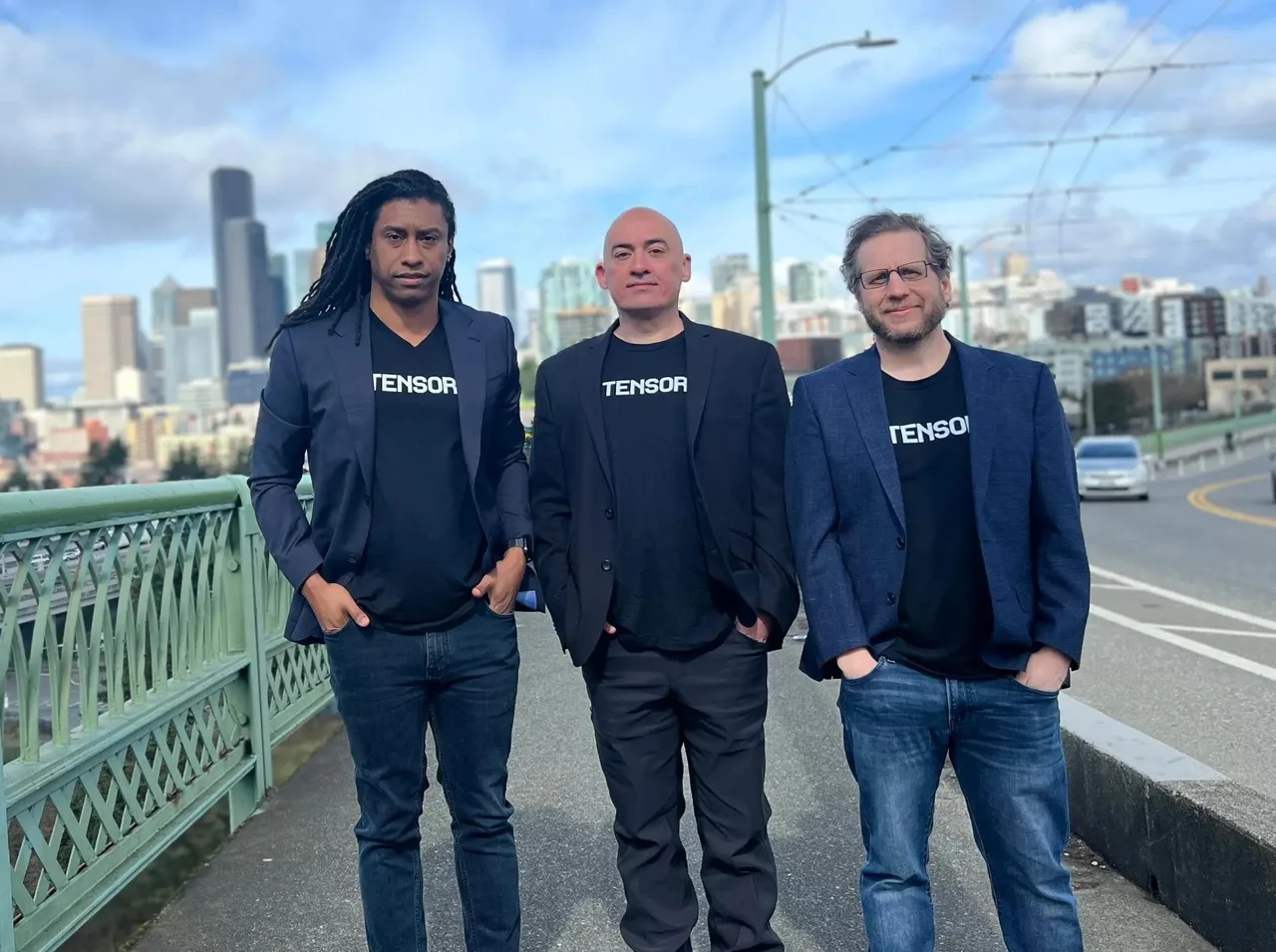
By Bhola Chhetri | Seattle Unfiltered | October 2026
Michael Ten-Pow was 29 when he took a break from Amazon to find out how far he could go in soccer. He had joined AWS in 2007 and spent years working on S3, the storage service that helped establish the public cloud. Between 2014 and 2017, his pursuit took him through amateur soccer in the Bay Area, semi-professional soccer in Australia, and professional soccer with Morvant Caledonia United in Trinidad and Tobago.
In Trinidad, he recalled, he found himself competing for playing time against a 19-year-old who was more skillful, equally committed, and much younger. “I realized that I didn’t have enough talent,” he told me during our conversation for Seattle Unfiltered. He looks back on those years as some of the best of his life. They also gave him an appreciation for competition that has stayed with him through his return to engineering and his eventual decision to start a company.
Today, Ten-Pow is Tensor9’s co-founder and CEO, working on a problem that can stand between a software company and an enterprise sale: the customer wants the product, but needs it to run inside infrastructure it controls. Meeting that requirement can mean substantial engineering work for a vendor whose software was built for its own cloud environment. Tensor9 helps vendors accommodate it, and already has customers running in production.
From Building the Cloud to Working Inside It
Ten-Pow moved to Seattle after studying computer science at Princeton. Amazon was his first job out of college, and the appeal was straightforward: an interesting team and a good offer in a city he knew little about. He joined AWS while the business was still young and spent roughly six and a half years working on S3.
Many of the engineering practices that would become familiar across the industry were still being established. Some, he recalled, were things “we had to discover” along the way. He remains proud of the team’s work on S3’s consistency model, which governs what applications see when data changes, and speaks with particular affection about the engineers he worked alongside.
His subsequent work in Amazon’s retail and advertising businesses included privacy-preserving systems. He left in 2020 as a Principal Engineer, then spent a year as Chief Engineer at BlueCrew, a startup helping people find hourly work. The role brought him closer to a product’s immediate effect on its users and gave him experience inside a smaller company. His published biography reflects the range of that career, from cloud infrastructure to employment software.
Ten-Pow had wanted to start a business for years. After BlueCrew, he explored ideas before settling on the deployment problem that became Tensor9. It brought him back to infrastructure, this time with a commercial obstacle in view: software that a customer wants to buy can still be unusable to that customer because of where it runs.
When the Customer Needs the Software Somewhere Else
A vendor may have a working product and an interested enterprise buyer, yet face a substantial new project before the deal can proceed. The buyer might require the software to run in its own cloud account or on-premises. The vendor then has to work out how to deliver it there, maintain it, and troubleshoot problems in an environment its engineers do not directly control.
Tensor9 takes software built for one cloud and adapts it to run wherever the customer needs it: another cloud, the customer’s own cloud account, or on-premises, without the vendor rewriting its infrastructure code. Vendors can still update, monitor, and troubleshoot those deployments without needing direct access to the customer’s environment. AI companies encounter this obstacle especially often because useful applications need access to sensitive material such as internal documents, code, tickets, and customer records.
Serval, which develops AI software for IT operations, provides a concrete example. According to the customer account published by Tensor9, Serval reached a live production deployment in three weeks. “We pointed them at our existing Terraform and Helm, and three weeks later we had a live production deployment,” said Teddy Wahle, Serval’s infrastructure lead, in the published testimonial. The account describes a deployment built from Serval’s existing infrastructure configuration, the kind of work a vendor might otherwise have to undertake itself.
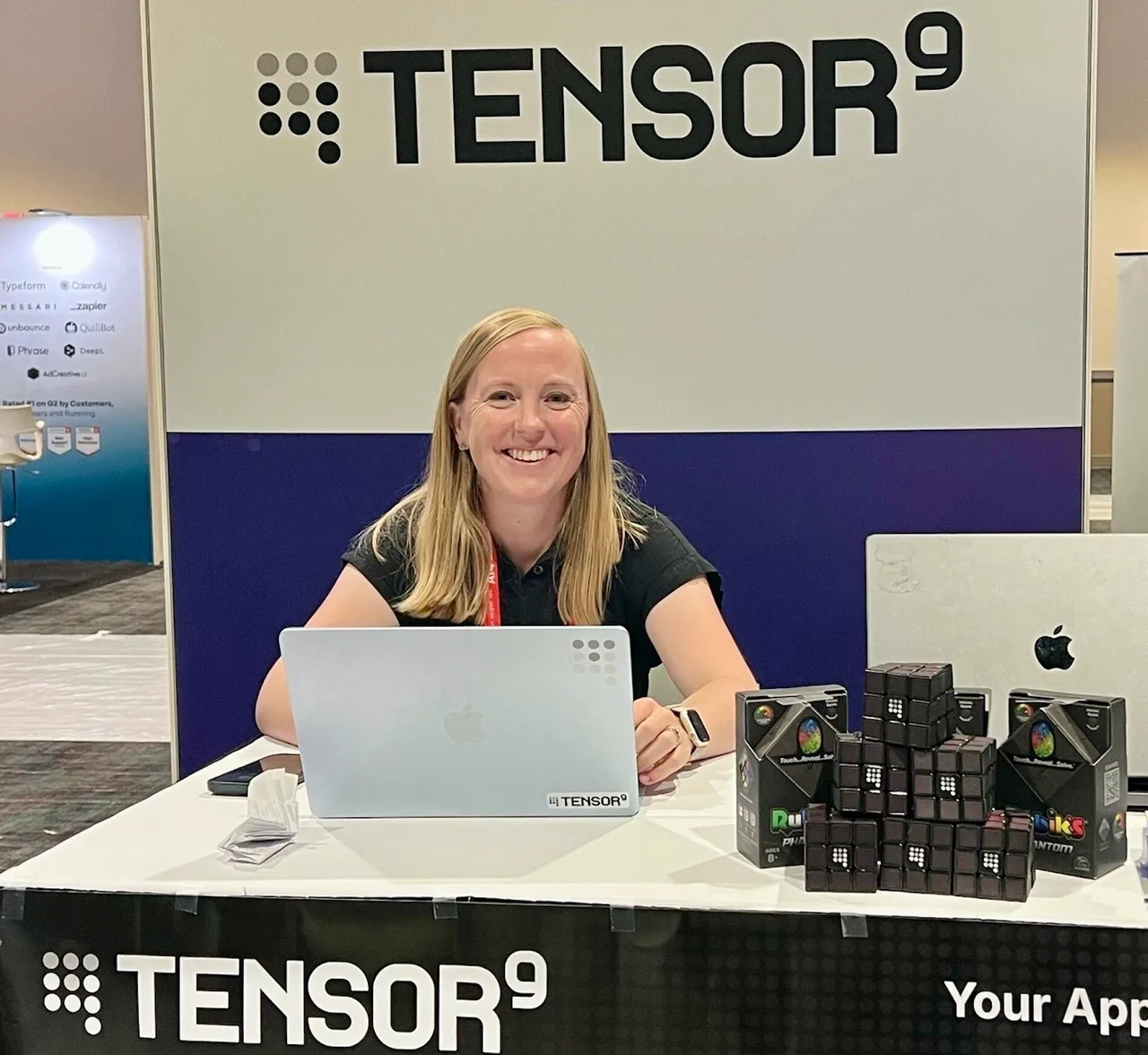
Tensor9 bootstrapped before announcing a Wing VC-led $4 million seed round in May 2025. The company has also expanded its leadership. Eryn Muetzel recently joined as a co-founder to lead product, bringing experience at VMware, Mesosphere, and Heptio.
Who Controls your AI?
When I asked Ten-Pow what excited him about Tensor9 heading into 2027, he focused on where AI applications would run. At a recent conference with enterprise leaders, he had heard familiar questions about adoption: how to measure value, how to assess risk, and how much access to give these systems. For the applications he is interested in, the access question is central to whether the software can do useful work.
An application that searches company knowledge or helps resolve an internal support request needs information about the organization. That creates a decision for the buyer about where the information will be processed and who will control the environment. As Ten-Pow put it, “the AI should run inside of the customer’s environment,” whether that means an enterprise cloud account or on-premises infrastructure.
For a vendor, the ability to offer that arrangement can open a path to customers whose requirements would otherwise prevent adoption. Ten-Pow also imagines more personal AI running on phones and other devices, giving individuals greater control over their information. That remains his view of where the technology could go; Tensor9’s present work addresses the deployment requirements software companies are already encountering.
Ten-Pow will explore these questions at Saying Yes to BYOC: What It Takes to Run Inside a Customer’s Environment, on Thursday, November 5, from 5 to 7 p.m. at AI House in Seattle. The event brings together speakers from Tensor9, Altinity, Tailscale, and Oumi. Its focus is the practical work of running software inside a customer’s environment, including the difficulties teams encounter after agreeing to do it.
Why Michael is Betting on Seattle
Ten-Pow’s confidence in Seattle comes from spending years around people who build large systems. He arrived knowing little about the city and now considers it the best place to live in the United States. His enthusiasm for its technology community is similarly rooted in experience: he values conversations that get quickly into what a product does, who needs it, and whether the business behind it holds up.
Part of that, he thinks, comes from the concentration of people who have worked at Amazon and Microsoft. Engineers who have spent years operating complex systems bring a particular understanding of what it takes to make software dependable. For someone building a company around enterprise infrastructure, that experience matters.
Amazon’s logistics operation is one example Ten-Pow finds instructive. Its capabilities reflect decades of investment and work that competitors cannot easily reproduce. He appreciates the patience involved in building that kind of business, and sees Seattle as a place where technical depth and sustained effort are understood.
What Competition Teaches
When our conversation turned to entrepreneurship, Ten-Pow drew a distinction between the appeal of being a founder and the circumstances that make starting a company possible. Financial security, family support, and professional connections can change the risk substantially. He has particular respect for people who begin without those advantages.
Soccer gave him another way to think about the work itself. In his account of competing in Trinidad, effort and commitment mattered, but they did not guarantee a place on the field. The younger player competing for his position had both, along with greater skill. Ten-Pow credits the experience with teaching him how to compete, and he sees a similar demand for results in building a product customers will use.
He compared the earliest days of starting a company, before customers or fundraising, to being in the middle of the ocean, trying to assemble a raft while persuading people on a passing cruise ship to jump into the water with you. There is a direction, but no precise destination. The analogy captures the difficulty of asking others to commit while so much is still being worked out.
Tensor9 has moved beyond those earliest days. It has funding, a broader team, and customers using its technology in production. Ten-Pow’s account of starting the company includes uncertainty, but the work he describes now is specific: helping vendors deliver and support software in environments they could not readily serve on their own.
He remains drawn to the qualities he values in Seattle: engineering, patience, and companies built around difficult problems. At Tensor9, he and his colleagues are putting that experience to work for software and AI vendors whose customers need control over where their applications run. Those deployments are already operating inside customers’ environments, with the continuing demands of updates, monitoring, and troubleshooting that make infrastructure a business rather than a one-time engineering exercise.