When I asked Marius Ciocirlan what advice he would give his younger self, he identified something he would keep to himself: the full list of problems waiting three years into his first company. Knowing all of them in advance, he said, might have stopped him from ever starting. “I would have been too scared to start it.”
That is a revealing admission from someone who has since sold a company, invested in startups and helped other founders through Techstars Seattle. Experience has given Ciocirlan plenty to say about building a business. It has also made him wary of how easily preparation can become a reason to stay put. He is now on what he calls his second real startup, with the false starts and side projects counted separately.
At Mark OS, where he is cofounder and CEO, his bet begins with a consequence of generative AI that is less exciting to demonstrate than a new image or video. A marketing team can produce more content, but someone still has to check it. Does the ad follow the brand’s guidelines? Are its claims legally acceptable? Is it ready for the channel where it will run? Producing ten versions instead of one gives the people responsible for approval ten versions to worry about.
Ciocirlan described campaign reviews that already take a week or two, sometimes longer. When he and his cofounders began thinking about the business in 2024, they asked what would happen if generative AI multiplied that workload. “That review process is going to become a massive bottleneck,” he said.
He founded Mark OS with David Dawson, a Ridwell cofounder, and Wesley Yun, formerly Asana’s head of design. The company says it has raised $4.1 million. Its 2024 pre-seed investors included Bessemer Venture Partners, Ludlow Ventures, Ascend and Breakers, according to GeekWire’s funding coverage. Their task is to make checking the work keep pace with making it.
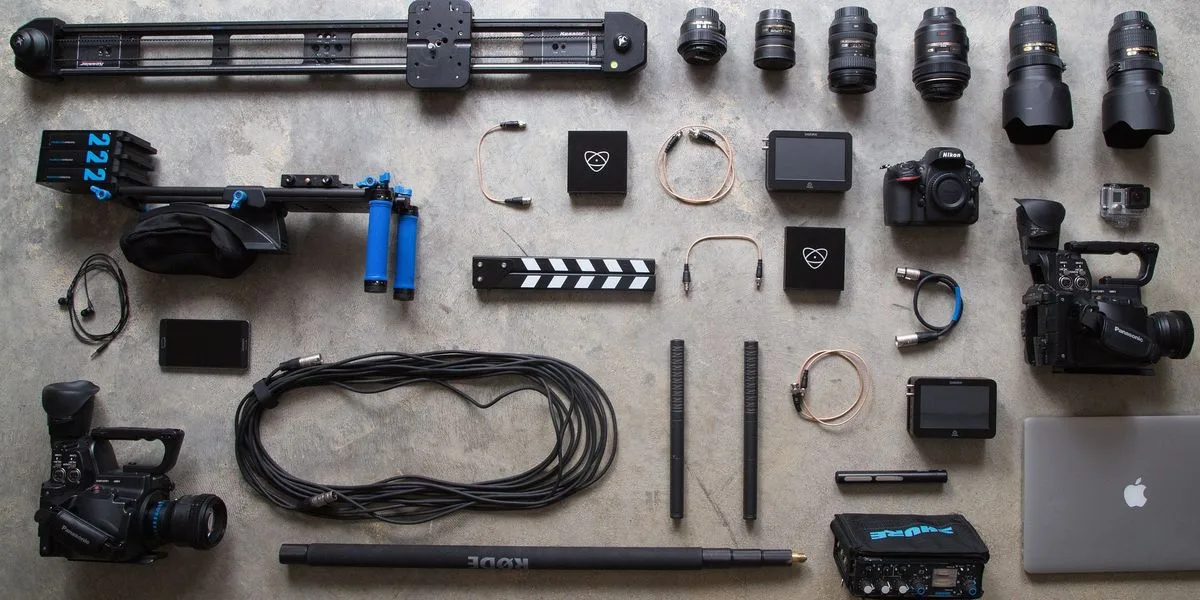
The First Business Started With Camera Gear
Ciocirlan’s first company came from a problem much closer to home. He had studied film at Arizona State University. His cofounder Arash Shiva was interested in photography. They knew people with expensive equipment who wanted to earn money renting it out, but did not necessarily trust handing it over to someone else. A marketplace would have to address that hesitation along with helping people find the gear.
ShareGrid became a place for filmmakers and photographers to rent equipment from one another. Ciocirlan wanted to use it himself, and so did his friends. By the time Backstage announced its acquisition of ShareGrid in January 2022, the marketplace had more than 150,000 members and offered equipment rentals, purchases and sales across more than 100 U.S. cities, according to the announcement.
Getting there had taken him across much of the country. Born and raised in Romania, Ciocirlan moved with his family to Chicago around 2000. He remembers having two weeks’ notice. He arrived in middle school without speaking English, unable at first to understand people asking his name. After film school, he moved to New York a few days after graduation, later lived in Mountain View and eventually followed his ShareGrid cofounder to Seattle.
By the time he began working on Mark OS, he had also spent time evaluating other people’s companies as an angel investor and as managing director of Techstars Seattle, a role he took in October 2022. For this business, he worked forward from a prediction: if generating images and videos became routine, which part of a company’s workflow would struggle to keep up?
More Content, More to Check
The review process offered a fairly concrete answer. A brand’s standards still apply when an image takes seconds to generate. So do the requirements governing its claims and the rules of the platform carrying it. A team can celebrate faster production and still find itself waiting to put the finished material in front of customers.
Mark OS says its software checks marketing content for issues involving logos, colors, fonts and messaging, flags potential legal violations and evaluates adherence to platform best practices. Its published uses include reviewing material before launch and monitoring content already running across advertising platforms, partner sites and creator feeds. The company lists Suntory, Almave and The King’s Trust Group among its clients.
Ciocirlan’s explanation led me to ask about planning ahead: what advice would he give founders trying to anticipate a market and build an advantage? Having just described how he thought through the consequences of an emerging technology, he promptly put a limit on the exercise. “My advice is not to overthink anything too much,” he said.
He sees founders trying to settle questions that only building something and talking to customers can answer. In his view, today’s tools let nontechnical founders get much further on their own, without first recruiting a CTO or raising money. They can start testing an idea while much of the business remains unresolved. That was the context for his admission about his younger self: a complete inventory of the difficulties ahead can scare someone out of taking the first step.
He Wants the Customer in the Pitch
When I asked whether technical founders can become too absorbed in building a solution before understanding the problem, Ciocirlan qualified the premise. They can over-optimize, he said. They can also build quickly. It depends on the person. What interests him is how well a founder knows the customer, and how quickly that knowledge, or its absence, becomes obvious during a fundraising conversation.
He offered the example of a deck announcing that an industry grew by 30% last year. A founder can pull together that kind of statistic without learning much about anyone who might buy the product. Ciocirlan would rather hear how a particular customer handles a problem, how much time it consumes and what that company has already spent trying to solve it. The numbers in his example were hypothetical; the expectation was specific. Come to the meeting with something learned from a customer.
“You are a narrator for your customer,” he said. He wants founders to interview people, understand their difficulties and bring those accounts into the pitch. A deck organized around the standard problem, solution and market-size slides can still miss the experience of the person who is supposed to need the product. Knowing that experience gives the founder something more persuasive to explain than a belief in the idea.
I brought up how easily sales and discovery get pushed aside in engineering circles. Ciocirlan expects those skills to become more important as more people gain the ability to code. More founders will be able to produce a working prototype. They will still need to find out who wants it, what it replaces and why someone would pay.
After the Rejection, Book Another Meeting
When I asked for his unfiltered take, Ciocirlan chose fundraising. He thinks founders often give up too early. The first wave of meetings brings rejection, the rejection arrives before much encouragement, and people begin wondering whether they should stop. His advice at that point is to increase the number of conversations.
He knows how that sounds to someone already exhausted. Founders ask him how to manage the stress of fundraising, and he tells them to put more time into outreach: contact founders who have raised, ask them to review the deck and seek introductions. He does not pretend the advice is always welcome. His reasoning is that the investor’s answer remains outside the founder’s control, while improving the story and finding another person to talk to are things the founder can act on.
Later in the conversation, after I brought up the strain and repetition of building a company, he went further. Work-life balance, he said, was not something founders should strive for while doing a startup. He described early mornings and late nights when nobody is watching or giving credit. In his account, the excitement often follows the work: repetition produces progress, and seeing that progress makes him want to continue. It is a demanding view of the job, and one he offers to people deciding whether to take it on.
Seattle Was a Choice the Second Time
For all the hours Ciocirlan expects a company to consume, his choice of where to build one has a great deal to do with life outside work. He first moved to Seattle because his ShareGrid cofounder already had family here. After selling the company, he and his wife took time off and reconsidered where they wanted to live. New York, San Francisco and Los Angeles were possibilities. They chose to stay.
He likes the access to the outdoors, the activities available to his children and the community his family has built. Seattle also had enough entrepreneurial activity to keep him engaged, and leading Techstars brought him further into it. He thinks local founders could do more to put themselves and their companies in public view. Asked about staying, though, he said he would make the same choice again.
Mark OS works from its own office in Pioneer Square. Ciocirlan made sure to clarify that early in our conversation, after I associated the neighborhood with Pioneer Square Labs. He, Dawson and Yun are building for the point when a company has plenty of content and still needs to decide what it can publish. For the brands buying their software, the useful measure will be how much of that review work it can reliably take off their hands.