In Fargo, North Dakota, Josh Lillie was making as many as 100 calls a day, trying to persuade businesses to move their data out of a closet and into Microsoft’s cloud. This was 2016, he recalled, and the conversation could begin well before a discussion of features. He had to explain why the cloud was somewhere a business could trust its data in the first place.
He had other places he could have gone after college: Florida, Washington, D.C., Chicago. He chose Fargo for the Microsoft opportunity. It was an entry-level sales job with a great deal of repetition, and it put him in front of people who needed a reason to change what they were doing.
Today, as director of startups at Databricks, Lillie encounters a different version of that problem. Founders know the company’s name. They associate it with big data and large enterprises. At dinners and events, he said, they still ask what it has to offer a startup.
His team works with venture-backed companies from pre-seed through Series B, helping them begin using Databricks as they build their businesses. For Lillie, that means understanding how a founder buys software, what the first useful application looks like and why a company would keep using the platform as it grows. A familiar name only gets the conversation so far.
Before the Cloud, There Were Garbage Cans
Lillie grew up south of Minneapolis and went to university in Minnesota with law enforcement in mind. The FBI or CIA sounded like an exciting destination. By orientation, he had begun to realize that the path probably was not for him.
Sales was already much closer to his everyday life. His father worked for a lighting manufacturer, and Lillie traveled with him to showrooms, where the conversation revolved around lamps, fixtures and the people buying them. He liked the relationship-building part of the work. Growing up, he also sold garbage cans, coasters and advertising door to door. “Basically anything that you can think of, I would try to sell,” he told me.
At Microsoft, that willingness met a more structured education. The early calls were about Azure. He later moved into managing customer relationships and closing deals, then joined a pilot team serving midmarket and startup customers. Building that team brought him into contact with finance, marketing and compensation design, parts of the business he had not encountered in the same way as a seller.
An opportunity in strategy followed. He had never held that kind of role, but he had done the work the strategy was supposed to support. Microsoft wanted that perspective, he said. He spent roughly two and a half years in the role before moving to Databricks. Looking back, he describes his career as a series of saying yes to opportunities whose value was not always apparent at the time.
When we talked about sales, he returned to its reputation. People hear the word and picture a used-car salesman. Lillie thinks about learning how another person sees a problem, then making a case for seeing it differently. Years of calling people who had not necessarily asked to hear from him gave him plenty of practice.
A Startup Buys Differently
Lillie said he joined Databricks to help build a growth team focused on getting customers to use the product, alongside the company’s emphasis on large enterprise sales. The team noticed that many customers beginning with a small amount of usage were early-stage startups. They wanted to try the platform, get an initial use case working and expand from there.
That required its own approach. A venture-backed founder at pre-seed and a midmarket credit union might both need data infrastructure, but they do not arrive at a purchase through the same process. Lillie’s work became more specifically focused on startups, and he now leads a team responsible for bringing new startup customers into the Databricks business.
The question he hears at events is understandable: why would a young company need a platform it associates with much larger organizations? His answer starts with the work a small team would otherwise have to assemble itself. Data needs to be usable for the product and its AI features. As customers, users and data accumulate, the infrastructure has to keep up. He presents Databricks as an alternative to stitching together separate open-source tools and cloud services.
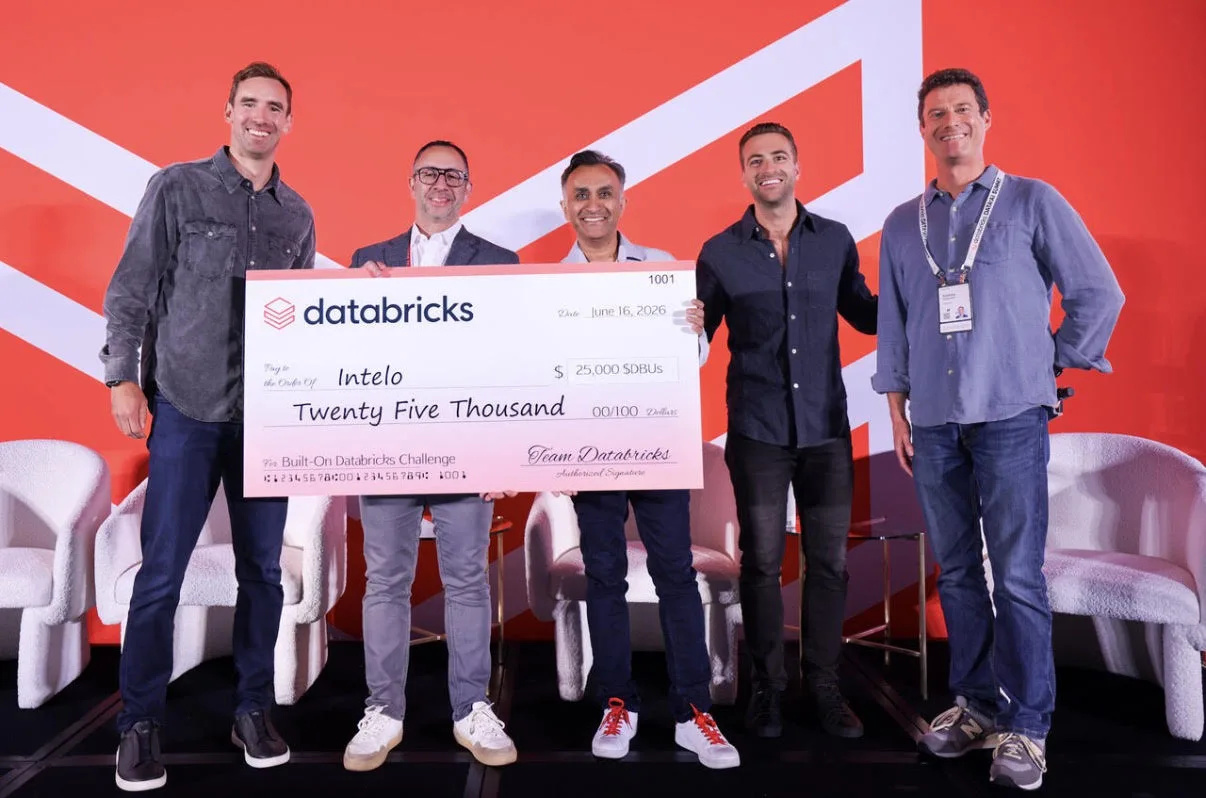
There is a concrete offer behind that pitch. The Databricks for Startups program currently advertises up to $200,000 in credits for Databricks and Neon for qualifying startups, along with hands-on guidance and access to technical resources and partners. The amount depends on eligibility. For a founder, the larger decision is whether the platform fits the business they are building and the costs they will carry as usage grows.
Lillie spends part of his time making room for those conversations in Seattle. He described working with Silicon Valley Bank, a division of First Citizens Bank, Fenwick and Madrona on gatherings for founders, investors and startup operators. Infrastructure is not usually the headline attraction. It is, however, where teams have to confront what is working, what is breaking and what they will need to support their next customers.
How Will the Customer Find You?
When I asked what the stronger startups he works with are doing well, Lillie began with distribution. He looks for founders who can explain how they will reach customers and why that route gives them an advantage. The answer might involve technology partnerships, integrations, a product that attracts users on its own or a founder doing the selling. What matters is that someone has thought seriously about how the product will get into people’s hands.
He also looks at what a company knows that its competitors do not. With AI products, he said, founders need to identify what is distinctive in their data and find a useful way to put it in front of customers. Possessing data alone is not the proposition. The customer needs to get something valuable from it, something that makes the product worth continuing to use.
Lillie points to Databricks itself when discussing the limits of technical confidence. In his telling, the company had to move beyond the expectation that building an excellent platform would be enough to bring customers in. It invested in the people and processes needed to reach them. He is open about his own interests here: “I’m biased obviously, being in go to market,” he said. But he thinks founders who take that work seriously are better positioned to grow.
I brought up the tendency to overbuild, using the example of an engineer making a Ferrari for a customer who wants a Prius. Lillie agreed with the need to solve the customer’s problem, then added a qualification: “Don’t be afraid to challenge your customer.” Listening does not require accepting every initial diagnosis. A seller may need to help the buyer understand the problem differently before either can agree on what would solve it.
Seattle Needs People Willing to Go First
Lillie’s enthusiasm for Seattle comes with an impatience about its appetite for risk. He sees a city with considerable technical talent, still heavily organized around large technology employers. When layoffs happen, he notices people looking for another big-tech role rather than joining a startup. He wants more people to consider the latter.
That is his assessment of the city, rather than a claim that a startup job is the right choice for everyone. His argument also places responsibility on the organizations around those workers. Established companies, investors and other partners have to help make Seattle a place where startups can keep forming and growing. He worries about what happens if that support falls short while other cities continue investing in their own communities.
When I asked what people might not find in his professional biography, he first mentioned cars. He has been going to Seattle car shows and meetups with friends, enjoying a community with its own interests and rituals. Then he brought the conversation back to early-stage companies. He had begun writing smaller personal checks to young teams, he said, and wanted more people to make those early bets.
Databricks’ published biography also identifies him as an investor and adviser to startups, separate from his company role. In our conversation, he framed those investments as one practical way to contribute to the city he wants Seattle to become. He wants more people in a position to invest to support teams while they are still young.
Near the end, given room to leave readers with a final thought, he returned to careers and the opportunities people decline. He wants Seattle’s talent to take more chances on itself. His own route has included choosing Fargo, taking a strategy job he had never done before and helping build a new sales approach inside Databricks. Now he is making smaller bets of his own on founders who are just getting started.