Joaquín Gallardo moved to San Francisco, learned to code, became a full-stack developer, and, in his telling, “six months later failed to write another line of code, which is ok nowadays as there are plenty of tools available.”
He has found plenty to do around the people still writing it. Gallardo is a senior vice president at First Citizens Innovation Banking, working with technology businesses in Seattle and the Pacific Northwest. His work has included helping companies from Series A onward with venture lending, treasury services, and liquidity management. The bank’s published biography also records a brief venture onto the other side of the table: in San Francisco, he helped cofound a pre-seed company.
When we met for a walk around Queen Anne and Kerry Park, Gallardo was thinking about what happens when capital becomes harder to find. He has watched Seattle’s technology community through the pandemic, the venture boom, and the retreat that followed rising interest rates. He sees a recovery, but he thinks the damage from that retreat has lasted beyond the worst of it.
“And part of what drives me is to make sure that investment here doesn't crater again.”
That is a considerable ambition for anyone working in banking. Gallardo’s explanation starts well before Seattle, with an economics education, time in Congress, and trips back and forth to Chile.
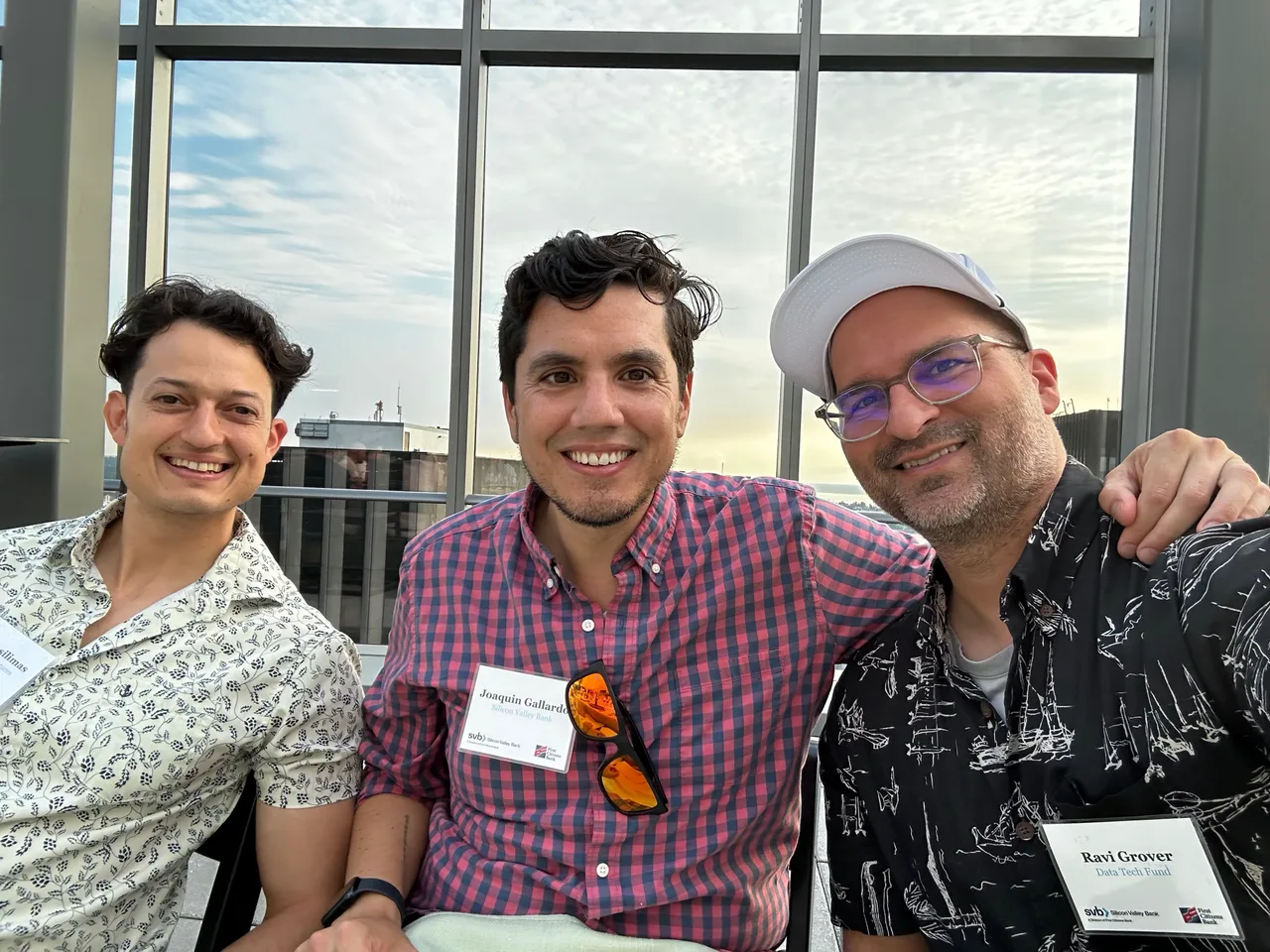
What Washington Couldn’t Give Him
Gallardo studied economics at George Mason University and worked in the House of Representatives. He had wanted to change the world. Working close to the machinery of government left him less convinced that the change he cared about would come from the top.
He thought instead about Chile and the economic development he had watched over decades of visits. Banking offered a way to participate in that development through the businesses receiving capital. His early banking work in Washington, D.C., served government contractors. Moving to San Francisco put him closer to technology companies and prompted the coding education that he now recounts with little ceremony.
“I get to now do the money multiplier and the productivity multiplier with tech,” he told me.
His current employer carries a new name. First Citizens launched the Innovation Banking brand in October 2026, replacing the Silicon Valley Bank branding for its Technology & Healthcare Banking division. Gallardo’s interest in the work is more personal than the institutional description: he wants capital to reach people who can turn it into useful businesses, and he does not think every worthwhile business needs the same kind of financing.
You Don’t Have to Raise Venture Capital
I asked Gallardo about the assumption that building a startup means raising venture capital. His answer began with what the founder actually wants to accomplish. A capital-intensive ambition may demand outside investment and the willingness to accept the expectations that come with it. A business built around a product customers will pay for can offer a very different route.
“You can bootstrap that into a life changing business for you and your family,” he said.
He does not promise that either route will make someone richer. Venture funding can leave a founder with a smaller stake in a much larger company, alongside greater pressure to deliver a large outcome. Keeping more ownership may suit someone whose ambitions do not require that scale. In his account, the decision begins with the business and the life the founder wants, before the fundraising process takes over.
What concerns him is the space between the enormous success and the modest exit. He says he has seen fewer of the roughly $100 million acquisitions that could once provide an outcome for a Seattle startup after its Series A. He is describing his experience, rather than offering a comprehensive count of deals. But it leads to a question that occupies much of our conversation: what, exactly, is an acquirer paying for now?
When Your Customer Can Build It
As we discussed acquisitions, Gallardo briefly broke off to mention Mount Rainier. We were still walking through Kerry Park. Then he returned to the difference between buying a software business and hiring the people who built it.
AI, he argues, is making parts of software development faster and cheaper. That changes the appeal of buying an existing product. An acquirer may be more interested in a team’s ability to solve a difficult problem than in the code the team has already produced. The valuable part may be the judgment or ingenuity behind a particular capability, especially when the buyer cannot reproduce it internally.
When I asked for an unfiltered take, he extended that argument to enterprise sales. A startup can have an enthusiastic end user and still face a buyer with very different concerns. Legal, compliance, risk, and IT teams all have a say. Privacy, control over data, and established internal processes can make building software inside the company appealing, provided the company can manage the work.
Gallardo thinks AI is making that option more practical. The sales conversation therefore includes a competitor that does not have its own booth or pricing page: the customer’s internal team. A product has to offer enough value to overcome both the usual procurement hurdles and the possibility that the customer could build what it needs.
“I think enterprise software is going down an exceptionally specialized route,” he said.
His argument leaves room for software companies, but demands more of their differentiation. A team with knowledge of a difficult industry or an unusual ability to solve its problems has something to sell. Producing software faster, by itself, becomes less persuasive when the customer has access to similar tools.
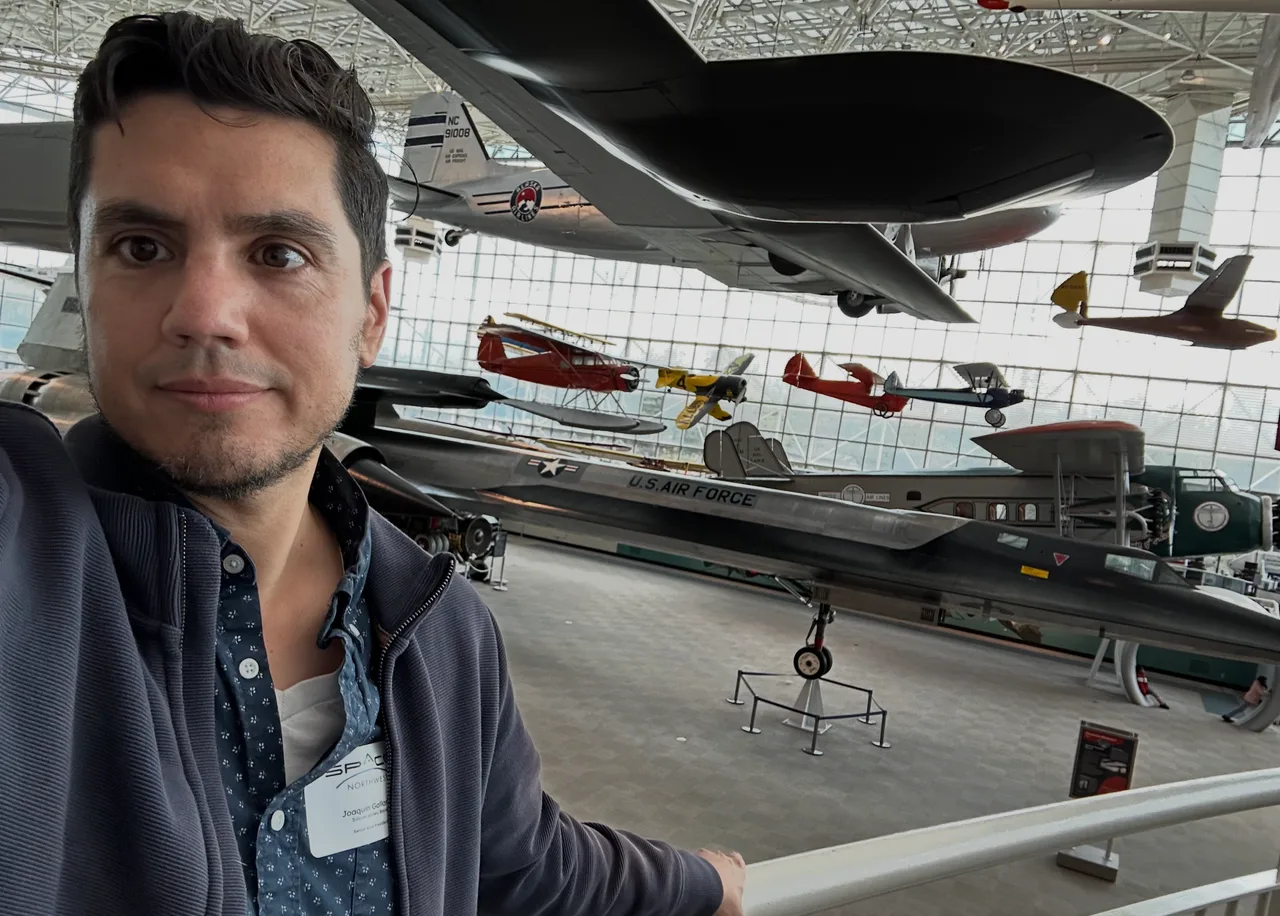
Why Rockets Entered the Conversation
Asked what excites him, Gallardo moved quickly into robotics, space, and other businesses that combine software with physical technology. He sees an opportunity for AI to accelerate development enough to make some difficult projects more compatible with venture investors’ timelines.
Rockets and fusion power plants were his examples. In his view, the people developing those systems still supply essential expertise and ingenuity. AI can help them move faster, and software companies can serve them by taking work off their hands. Engineers concentrating on a physical system may have little interest in developing and maintaining their own AI tools.
That offers a more promising customer relationship than selling something a buyer would prefer to reproduce internally. The customer wants help with work outside its core expertise so it can spend more time on the engineering it exists to do.
Gallardo was also willing to mark the limits of his assessment. When I asked whether the biggest opportunities lay in replacing processes or speeding up existing ones, he began, “Well, maybe this isn't my area of expertise.” He returned to the importance of people’s context, while acknowledging that plenty of businesses need straightforward automation rather than constant invention.
Staying in Seattle, Investing Beyond the Moment
Gallardo has lived on both coasts. When I asked why he and his family stay in Seattle, he included the weather among his reasons, along with people, PNW culture, amenities, and technology community. He is unconvinced by the idea that individual tax decisions tell the whole story of a city’s economic prospects.
“The ecosystem here is what creates the value,” he said.
Near the end of our conversation, I asked whether there was anything else he wanted readers to know. He brought up climate technology. He worries that investment can move away from a problem even as the need to solve it grows. He wants more capital committed to that work and is concerned about the expertise and industries that could develop elsewhere if the United States pulls back.
For someone who entered banking partly because he wanted to see economic development happen, that prospect bothers him. Seattle’s next funding recovery matters to Gallardo. So does what gets financed during it, including businesses whose work will still need money after investors have found something else to get excited about.