Brian Pasalich’s mother was not looking for the next great investment. After his parents divorced, she went back to work as a school cook, getting up early to provide for her family. When our conversation turned to the risks people take to get ahead, Pasalich brought her up. She had no particular interest in stock trading or venture capital. “All she wants to do is provide,” he said.
Pasalich has spent much of his career in an industry that asks people like his mother to become more interested in finance. He has run wealth-management businesses, taught financial-literacy classes and led a behavioral-fintech company. Now he is building a guide/solution for people who would rather not make money management another occupation. It starts with what matters to them and helps them choose one small action toward it, building the confidence and agency to move forward on their own terms.
In his current role, Pasalich leads member experience at an investment banking financial technology firm, working to improve how the business supports the professionals it serves.
“Money is a tool,” he said. To explain, he compared it to a nail used in building a house. The nail is necessary. It is also a strange thing to organize an entire life around. He is building Sherpa with the goal of making it unnecessary. For Pasalich, success means someone can make and act on their own financial decisions without needing the guide anymore.
What Experience and Loss Taught Him
Pasalich grew up between the United States and Yugoslavia before his family moved to Montana when he was in seventh grade. His father owned construction businesses, and work began early. He remembers learning math at the other end of a measuring tape, with a father whose formal education ended in tenth grade and whose intelligence he still admires. By 19, Pasalich said, he had bought his first investment property.
Medicine was his original direction. He began emergency medical work as a teenager, served in the Army and worked as a paramedic in military and civilian settings. He studied microbiology before deciding against a medical career. His earlier account on the Ambition Today podcast also describes that path through emergency care and into financial planning.
An early technology venture brought a different education. Around the dot-com era, Pasalich became involved in a voice-technology company, investing a substantial amount of his own money. He recalled winning work with the IRS and believing the technology had considerable promise. Then funding fell away during the bust. He said he lost six figures and spent three months sleeping on a friend’s couch.
Pasalich returned to wealth management, eventually running firms in Seattle and New York. He connects that period of personal loss to the financial-literacy teaching he later did through New York and Seattle-area organizations, including YMCAs and university campuses. He taught thousands of people, many of whom the financial industry had struggled to reach in ways that felt relevant to their lives. The lessons included matters that financial professionals can forget are unfamiliar: how credit works, what borrowing costs mean and why an experience with money in one country may not prepare someone for the system in another.
He still believes in explaining those things. What frustrates him is the assumption that delivering the explanation completes the job. People arrive with fears, habits, obligations and different ideas of what a good life looks like. Understanding those differences is where he wants the guide to begin, helping people choose a step they feel able to take toward something that matters to them.
The Person Behind the Financial Profile
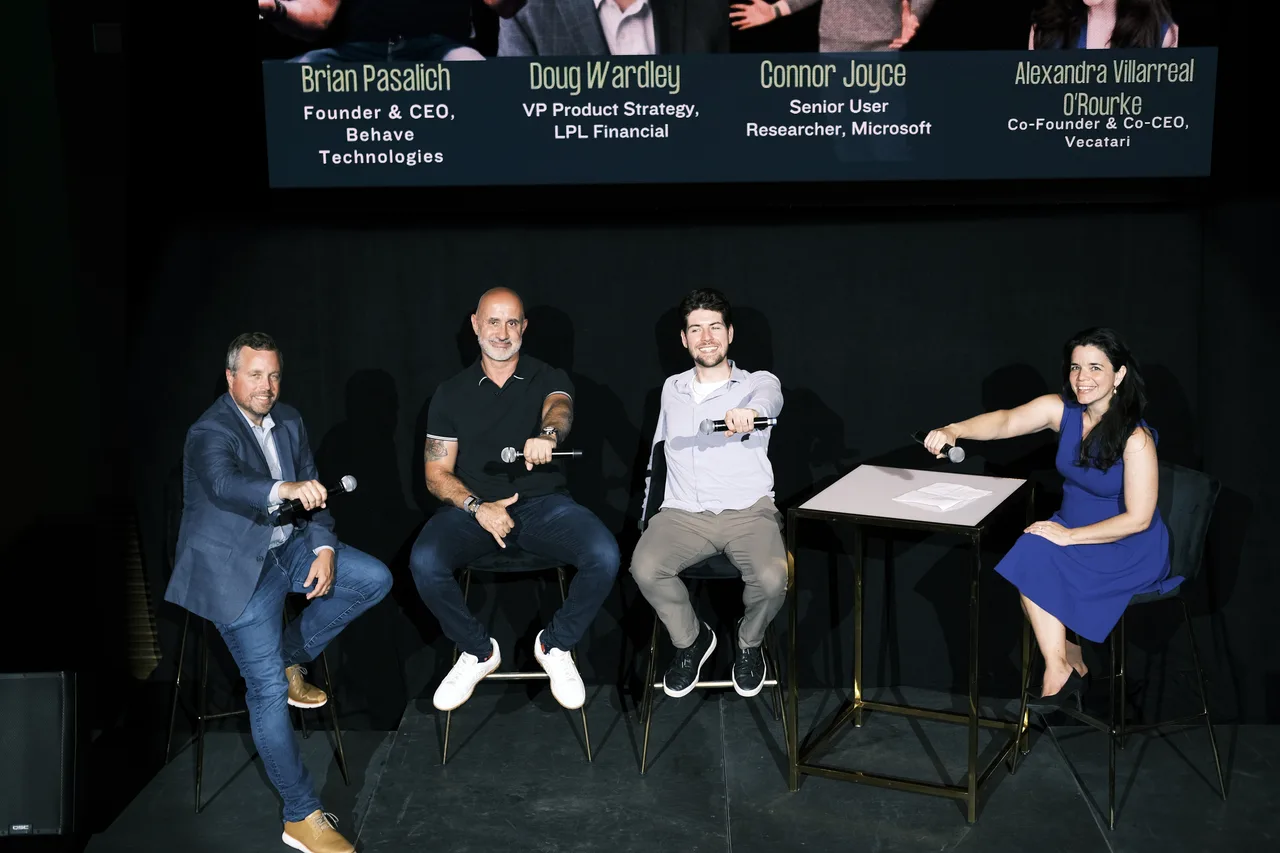
At Syntoniq, later known as Behave Technologies, Pasalich worked on that problem from inside financial services. He said he first became involved as an adviser and investor. He described building the business with cofounder Prasad Ramani and a team of behavioral scientists helping financial firms understand the person behind the financial profile and put that understanding into practice.
One example was ET Money. The Indian investment platform documents its collaboration with Syntoniq on an investor-personality assessment that examines factors including confidence, loss aversion and financial knowledge. Those distinctions give an adviser more to work with than a single answer about willingness to take risk. Someone’s confidence in making a decision and their reaction to losing money may tell different stories.
Pasalich said the team’s internal ambition was to improve financial outcomes for 20% of the world’s population through behavioral science. That was a goal, not a claim of reach. When he talks about the company, he returns to the possibility of improving client outcomes through institutions much larger than his own, and to the difficulty of keeping the person at the end of the process in view.
His argument to financial firms was commercial as well as ethical: serve clients better, and stronger relationships, retention and revenue should follow. He thinks the industry too often starts with the revenue target and works backward.
When mentoring founders, he asks them to explain whose problem they are solving and why it matters. He sees commercial success as something to build through that purpose, with a clear connection between how the business grows and how the people it serves benefit.
Not Everyone Can Afford the Big Risk
Later in the conversation, I raised the tension between financial survival and taking the kinds of early risks that can change someone’s prospects. Pasalich pushed back on how available that route really is. “Not everybody has that capacity,” he said. That was when he returned to his parents, and to his mother’s interest in providing for her children rather than following the markets.
He sees a problem in financial products that expect the customer to share the industry’s enthusiasm for investing. An unfamiliar system can be intimidating long before anyone reaches the question of which investment to choose. For someone raised in a household where investing was not part of daily life, more opportunities to trade do not necessarily make the first decision easier.
The guide he is developing begins with the person’s own question.It would help a person identify what they are trying to accomplish, explain possible paths and make the tradeoffs understandable. His approach starts with building understanding, then helping people explore their options: how each works, its advantages and disadvantages, and what it could mean for their lives. The aim is to put them in the driver’s seat, equipped to make their own choice or seek guidance on their own terms, rather than simply accept an expert’s recommendation.
Pasalich describes financial agency as the internal shift that makes a first step possible. It can mean moving from helpless to capable by believing that a step you take can matter, from reactive to intentional by choosing what to do with your money before the next crisis makes the choice for you, or from overwhelmed to in control by seeing how what you do can change what happens next. In his experience, most of the people he’s worked with already have information about money.
What keeps them stuck varies, and even a small shift in any of those three areas can make it easier to act. That’s where he wants Sherpa to help. The guide starts by trying to understand what’s happening in someone’s life and what matters to them. Its job is to help them see their own situation more clearly, understand what’s within their control, and decide for themselves what to do next.
An AI That Leaves Room for People
Pasalich has a reference point for the kind of technology he wants: Star Trek: The Next Generation. He is an enthusiastic fan, and when he talks about AI he contrasts its world with WALL-E, where people have become dependent on screens and machines. In his preferred version, technology works in the background while people spend their time with one another, solving problems. He is much more interested in that future than in another reason to keep checking a phone.

He is studying to understand how to build toward it. Pasalich said he returned to the University of Washington for a degree in integrated social sciences and was preparing to study AI in business at Boston University’s Questrom School of Business. “I’m not doing it for the credentials. I’m doing it to learn,” he said. He wants to understand how AI can help people think through a decision. Can it pick up on what someone is struggling to put into words, help them see their situation more clearly, and leave the choice in their hands?
He is also wary of confusing an empathetic response with human empathy. For a Next Generation fan, the comparison comes naturally: Data wanted to be human. Pasalich sees emotion and irrationality as part of the people the software must serve, rather than inconveniences to remove from the interaction. His focus is on how AI can make room for those human qualities while helping people understand their financial choices clearly enough to make decisions on their own terms.
When Pasalich thinks about whom he wants to reach, he comes back to his mother. She got up early to cook at a school so she could provide for her family. She already knew what she was working toward. He wants to build something that starts there and helps people find their footing. When they can take the next step without it, he’ll consider it a success.